
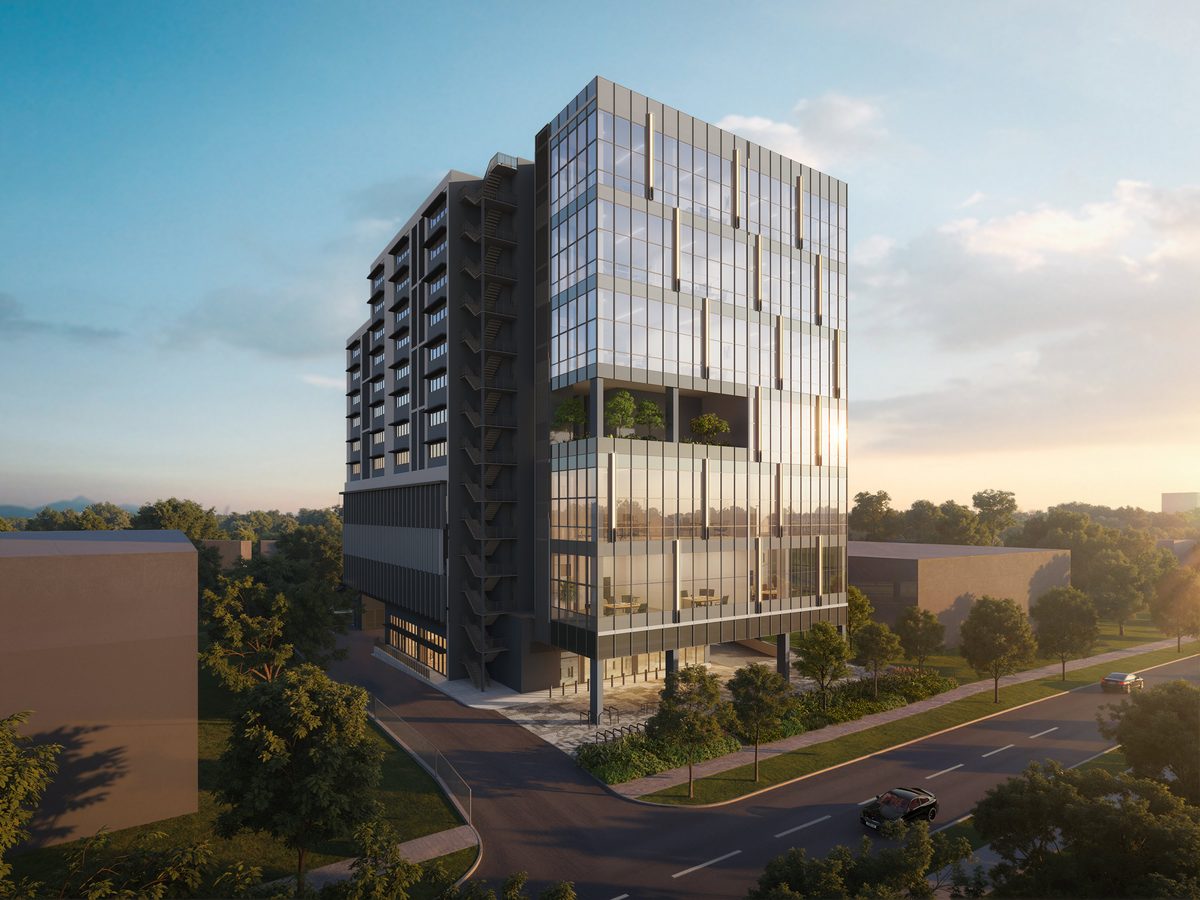
Most buyers who explore Singapore property think in terms of homes. But for investors and business owners willing to look past the residential market, industrial property offers a different set of mechanics — and occasionally, a genuinely rare opportunity. Space Nova at 21 New Industrial Road is one worth understanding, because it is that uncommon thing in today's market: a freehold industrial development.
Why freehold is rare in industrial
The overwhelming majority of new industrial space in Singapore is sold on leasehold tenures — frequently 30 or 60 years — released through JTC and government land sales. When the lease runs down, the asset's value erodes with it, and financing options tighten as the remaining tenure shortens. A freehold industrial title sidesteps that decay entirely: it is owned in perpetuity, with no clock counting down in the background.
That scarcity is the whole point. Freehold industrial land is finite and seldom released, especially in mature, well-connected precincts. For an owner-occupier, it means a permanent operating base; for an investor, it means an asset class with a built-in supply constraint that tends to support resale demand.
A worked example in Tai Seng
Space Nova is a freehold B1 (clean) industrial development at 21 New Industrial Road in District 14, developed by JVA NIR Pte Ltd with expected completion in 2028. It is a compact estate of 47 strata units on a site of about 36,257 square feet, with partial ramp-up access, high floor-to-floor ceilings and a limited number of ground-floor units. The B1 (clean) zoning suits light manufacturing, technology, research, e-commerce fulfilment and warehousing.
Location does a lot of the work. The site sits beside the Bartley flyover in the established Tai Seng precinct, within reach of Tai Seng and Bartley MRT on the Circle Line, with quick links to the PIE, KPE and CTE. For a business that needs to attract staff and move goods, that connectivity matters as much as the tenure.
How industrial differs from residential for buyers
The cost mechanics are different, and buyers carrying residential instincts can misjudge them. Industrial property does not attract Additional Buyer's Stamp Duty, and there are no foreign-ownership restrictions of the kind that apply to homes — though GST may apply where the seller is GST-registered, which a GST-registered buyer can typically recover. These are different rules from the residential cooling measures most buyers know, so they deserve proper advice. I am not a tax adviser, and the right structure depends on your circumstances.
Where industrial fits a portfolio
Industrial property follows business cycles rather than the housing market — tenant demand, lease structures and location within an industrial cluster drive value. It is not automatically better than residential; it suits buyers who want diversification and are comfortable with industrial tenancy dynamics. A scarce freehold asset in a connected precinct is, however, the kind of holding that tends to stay in demand.
If you want to understand how a freehold industrial asset like Space Nova would sit alongside your existing holdings, or you are weighing an owner-occupier purchase for your business, I am glad to talk it through. For full project details — floor plans, unit availability and the indicative price guide — visit the official Space Nova website.
Kris Ang helps clients sell, buy, rent and invest in property across Singapore. Explore more guides and insights on the krisang.com home page, or call +65 9222 9919.